Caspian Sea faces declining water levels and biodiversity loss
Stockholm, February 15 (Hibya) - According to Euronews, the Caspian Sea is facing declining water levels and biodiversity loss.
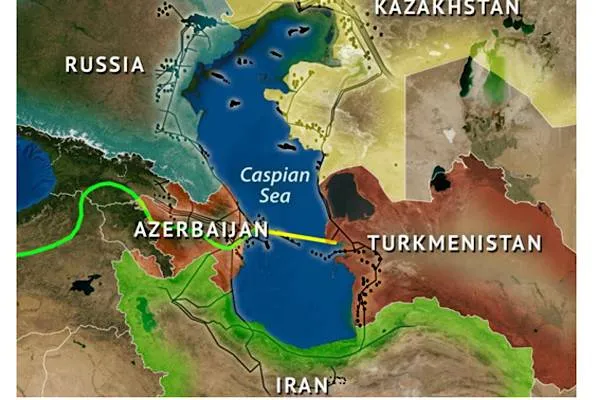
Azerbaijan drew attention to the growing environmental risks at the United Nations in Geneva as new international rules regulating major infrastructure projects in the region entered into force.
During the UN discussions, Leyla Aliyeva, Vice President of the Heydar Aliyev Foundation, together with senior officials and environmental experts, highlighted governance challenges affecting the world’s largest enclosed body of water. Delegates emphasized the importance of long-term monitoring, advanced scientific data, and closer coordination among the Caspian littoral states and international partners.
Under the legally binding Tehran Convention, major infrastructure projects are required to assess potential transboundary environmental impacts if requested by another Caspian state.
Projects include oil and gas facilities, pipelines, power plants, dams, transport corridors, and large-scale water transfers. Assessments must be made public and approval from the relevant states must be obtained before construction begins.
Arnold Kreilhuber, Director of the UNEP Regional Office for Europe, told Euronews: “The Caspian Sea is under increasing pressure due to the triple planetary crisis of climate change, biodiversity loss, and pollution.”
“Regional cooperation is vital. The Tehran Convention and efforts to develop an action plan to address the sea’s retreat can unite efforts to protect this unique body of water and the communities and species that depend on it,” he said.
Officially titled the Framework Convention for the Protection of the Marine Environment of the Caspian Sea, the Tehran Convention provides the governance framework for regional cooperation. It has been signed by the five Caspian littoral states – Azerbaijan, Iran, Kazakhstan, Russia, and Turkmenistan – and aims to protect the marine environment and promote sustainable development.
The Convention’s Secretariat is currently administered on an interim basis by the United Nations Environment Programme (UNEP). Since its adoption, the Convention has guided measures on oil spill response, land-based pollution, and biodiversity conservation. A fifth protocol on environmental monitoring and information exchange is under negotiation to strengthen long-term sustainability efforts.
The protocol brings the Caspian region closer to international environmental standards during a period of rapid economic expansion. The sea lies along Europe-Asia energy and transport corridors, and its environmental health is of vital importance beyond the region. Stronger oversight is needed to prevent habitat loss, pollution, and water level fluctuations that could undermine both ecosystems and economic connectivity.
Europe Asia News
 Facebook
 Tweeter
 Whatsapp