Lavrov: We advocated preserving the ASEAN-centered regional security architecture
Moscow, November 17 (Hibya) - Russian Foreign Minister Sergey Lavrov stated following the 21st East Asia Summit held in Manila, the capital of the Philippines, that the ASEAN-centered regional cooperation framework should be preserved. Lavrov alleged that Western countries were attempting to extend NATO's military and political influence into the Asia-Pacific region.
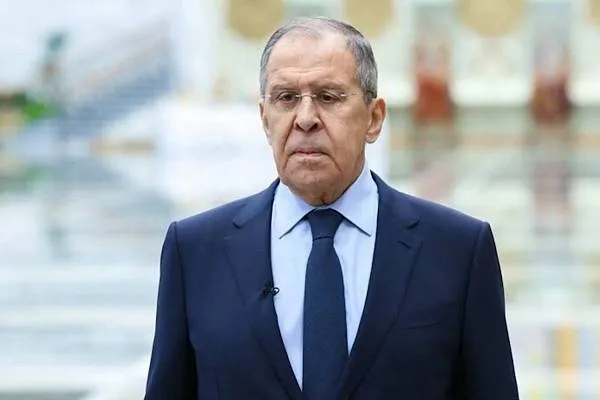
Russian Foreign Minister Sergey Lavrov answered journalists' questions following the 21st East Asia Summit held in Manila, the capital of the Philippines.
Stating that he had headed the Russian delegation on the instructions of Russian President Vladimir Putin, Lavrov said the summit addressed issues including the future of the global economy, trade, investment, artificial intelligence, and combating cyber fraud. Lavrov also reported that a political declaration reflecting consensus-based assessments had been adopted during the summit, noting that statements by certain Western countries regarding Ukraine had not been included in the declaration.
"The ASEAN-centered framework must be preserved"
In his remarks, Lavrov highlighted the importance of the regional security architecture centered on the Association of Southeast Asian Nations (ASEAN). He alleged that Western countries were attempting to weaken this inclusive, consensus-based framework and draw certain ASEAN countries into exclusive military blocs.
Claiming that NATO was increasing its presence in the region and seeking to contain China, Lavrov also criticized proposals to establish a new NATO-like military structure in the Indo-Pacific region. He noted that respecting the rules established by ASEAN countries and regional cooperation mechanisms would improve the effectiveness of summits.
Assessment of AUKUS and regional security
Responding to journalists' questions about NATO's influence in the region and security risks, Lavrov claimed that NATO's military activities beyond the borders of its member states had led to crises.
Commenting on the AUKUS partnership established between the United States, the United Kingdom, and Australia, Lavrov argued that activities involving nuclear submarine technologies raised questions regarding International Atomic Energy Agency (IAEA) oversight and transparency requirements. He also claimed that military exercises on the Korean Peninsula and developments surrounding Taiwan posed risks to regional security.
Meeting of Russian, Chinese, and US leaders
Commenting on the trilateral meeting planned for November 19 between the leaders of Russia, China, and the United States, Lavrov stated that the meeting would be beneficial because it would bring together three nuclear powers.
Lavrov said the meeting's agenda was being prepared but declined to share details of its content. He noted that the leaders would have an opportunity for a free exchange of views. Whether the format would become a regular arrangement would depend on how beneficial the leaders considered the meeting, he added.
Ukraine negotiations and Europe's role
Speaking about negotiations concerning the Ukraine crisis and Europe's possible role, Lavrov said Russia's objectives remained unchanged. He alleged that European countries were attempting to preserve the existing security order centered on NATO and the European Union, arguing that this approach amounted to building a security architecture against Russia rather than alongside it.
Responding to a question about French President Emmanuel Macron's desire to represent Europe in potential negotiations, Lavrov criticized Macron's role in previous talks concerning the Ukraine crisis. He claimed that an agreement on implementing the Minsk agreements had been reached at the Normandy Four meeting in Paris in 2019, but that no progress had followed.
Without providing details of the proposals Russia would bring to negotiations, Lavrov stated that the country's objectives had previously been outlined by Putin and that Russia would not abandon them.
Europe Asia News
 Facebook
 Tweeter
 Whatsapp