Report: 60,000 people own three times the wealth of the poorest half of humanity
Stockholm, 10 December (Hibya) – According to the 2026 World Inequality Report, regarded as an authoritative source and based on data compiled by 200 researchers, fewer than 60,000 people – less than one-thousandth of the world’s population – hold three times as much wealth as the poorest half of humanity combined.
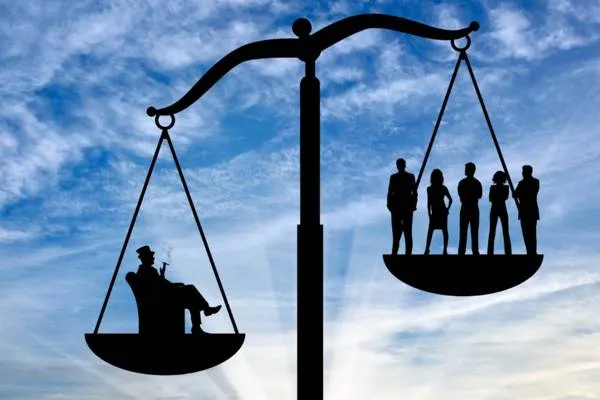
The report finds that wealth (the value of people’s assets) is even more concentrated than income or earnings from work and investment: the richest 10 percent of the world’s population own 75 percent of all wealth, while the poorest half own only 2 percent.
According to the report, in almost every region the richest 1 percent are wealthier than the entire bottom 90 percent, and wealth inequality is rising rapidly worldwide.
The authors, led by Ricardo Gómez-Carrera of the Paris School of Economics, write: “The result is a world in which a small minority wields unprecedented financial power, while billions of people are excluded even from basic economic stability.”
The report notes that the share of the richest 0.1 percent in global wealth has risen from about 4 percent in 1995 to more than 6 percent; meanwhile, millionaire wealth has grown by roughly 8 percent per year since the 1990s – almost twice the rate of increase for the poorest 50 percent.
Among the authors is influential French economist Thomas Piketty, who points out that inequality has “long been a defining feature of the global economy”, but that by 2025 it has reached “levels that require urgent intervention”.
The authors stress that reducing inequality is “not only a matter of justice, but also essential for the resilience of economies, the stability of democracies and the livability of our planet.” They argue that such extreme divides are no longer sustainable for societies or ecosystems.
Prepared every four years together with the United Nations Development Programme, the report draws on the world’s largest open-access database on global economic inequality and is widely seen as shaping international public debate on the issue.
In the foreword, Nobel Prize–winning economist Joseph Stiglitz reiterates his call for an international panel, similar to the UN’s IPCC on climate change, to “monitor inequality worldwide and provide objective, evidence-based recommendations”.
Europe Asia News
 Facebook
 Tweeter
 Whatsapp