Cuba announces it is ready to hold talks with the United States
Washington, February 5 (Hibya) – Cuban Deputy Foreign Minister Carlos Fernández de Cossío told CNN on Wednesday that Cuba is ready for “meaningful” dialogue with the United States, but is not willing to discuss a change of government.
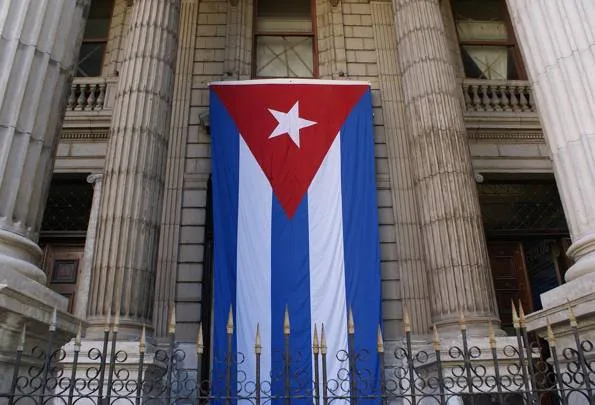
These remarks came at a time when the Trump administration has been increasing pressure on the island with rhetoric about regime change.
Fernández de Cossío said, “Just as the United States is not prepared to discuss its constitutional system, political system or economic reality, we are also not prepared to discuss our constitutional system.”
He stated that the countries have not yet established a “bilateral dialogue,” but that there have been “some exchanges of messages” with individuals “linked” to the highest levels of the Cuban government.
The comments came a few days after U.S. Secretary of State Marco Rubio said that the United States “would like to see” regime change in Cuba, but would not necessarily implement it.
The United States has threatened to impose tariffs on countries exporting oil to Cuba, claiming that Havana poses an “extraordinary threat” by aligning with hostile countries and malicious actors and by hosting military and intelligence capabilities.
De Cossío rejected this justification. “Cuba poses no threat to the United States. It is not aggressive toward the United States. It is not hostile. It does not harbor terrorism, nor does it support terrorism,” he said.
He called on the United States to ease its pressure campaign, saying it is already harming the country.
De Cossío said Cuba may be forced to consider austerity measures and unspecified sacrifices to protect its fuel supplies, but did not specify how much fuel remains in reserve.
“The suffering endured by Cuba, in terms of economic pressure measures, is equivalent to war,” he said.
On Tuesday, the U.S. Embassy in Havana urged American citizens in Cuba to take precautions during the energy crisis by conserving fuel, water and food and keeping their phones charged. It also warned of an increase in government-backed protests against the United States, as well as cases in which U.S. citizens were denied entry into the country.
De Cossío argued that dialogue is a better alternative than coercion for the United States. While stating that Cuba will not discuss regime change with U.S. officials, he said Havana is willing to talk about issues that could benefit both countries, including regional security.
“If the United States wants cooperation in combating drug trafficking, Cuba can help. We have helped in the past and can continue to help regarding trafficking that takes place within the region,” he said.
Europe Asia News
 Facebook
 Tweeter
 Whatsapp