Politico: NATO strengthens its presence in the Arctic to please Trump
Brussels, February 12 (Hibya) – According to a report published today in Politico, NATO has strengthened its presence in the Arctic in a move designed more to deter U.S. President Donald Trump than to counter Russian threats.
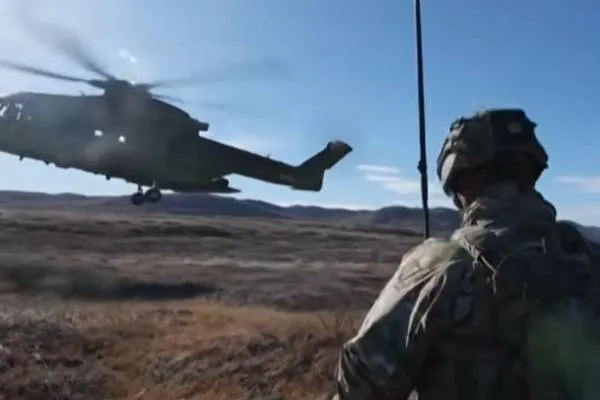
Diplomats and experts who spoke to Politico said that this effort is largely a rebranding attempt aimed at soothing the U.S. president in response to an exaggerated threat.
Politico quoted 13 NATO diplomats, alliance officials, and military analysts who spoke anonymously, pointing to a significant shift in NATO’s focus in the region, but they noted that the shift is driven more by political reasons than by immediate military necessity.
With NATO’s official launch of its new “Arctic Watcher” mission, this diplomatic effort demonstrates U.S. allies’ intent to maintain Washington’s support in the face of concerns that failing to calm Trump on Greenland might lead to disaster.
NATO Secretary General Mark Rutte told reporters on Wednesday, “In the face of Russia’s increasing military activity and China’s growing interest in the north, it was very important that we did more.”
In January, Trump’s Greenland threat became a turning point for many European countries, cementing their view of the U.S. as a permanently unreliable ally. This issue is expected to be on the agenda at the Munich Security Conference this weekend, where U.S. Secretary of State Marco Rubio will meet with several allied leaders.
Experts say that security concerns are largely exaggerated and that NATO has the capacity to handle Russia in the Arctic.
A NATO diplomat added, “The threat is more hypothetical than real,” and noted that the initiative has a clear “symbolic and communicative” purpose.
According to a Public First poll conducted in five countries, most people in the U.S., Canada, France, the U.K., and Germany said that Trump was serious about his efforts to seize Greenland, with most thinking his goal was to obtain natural resources and increase U.S. control over the Arctic. Only a minority thought he was motivated by threats from Russia and China.
Europe Asia News
 Facebook
 Tweeter
 Whatsapp